

Black Widow Spiders
What are Black Widow Spiders?
Description
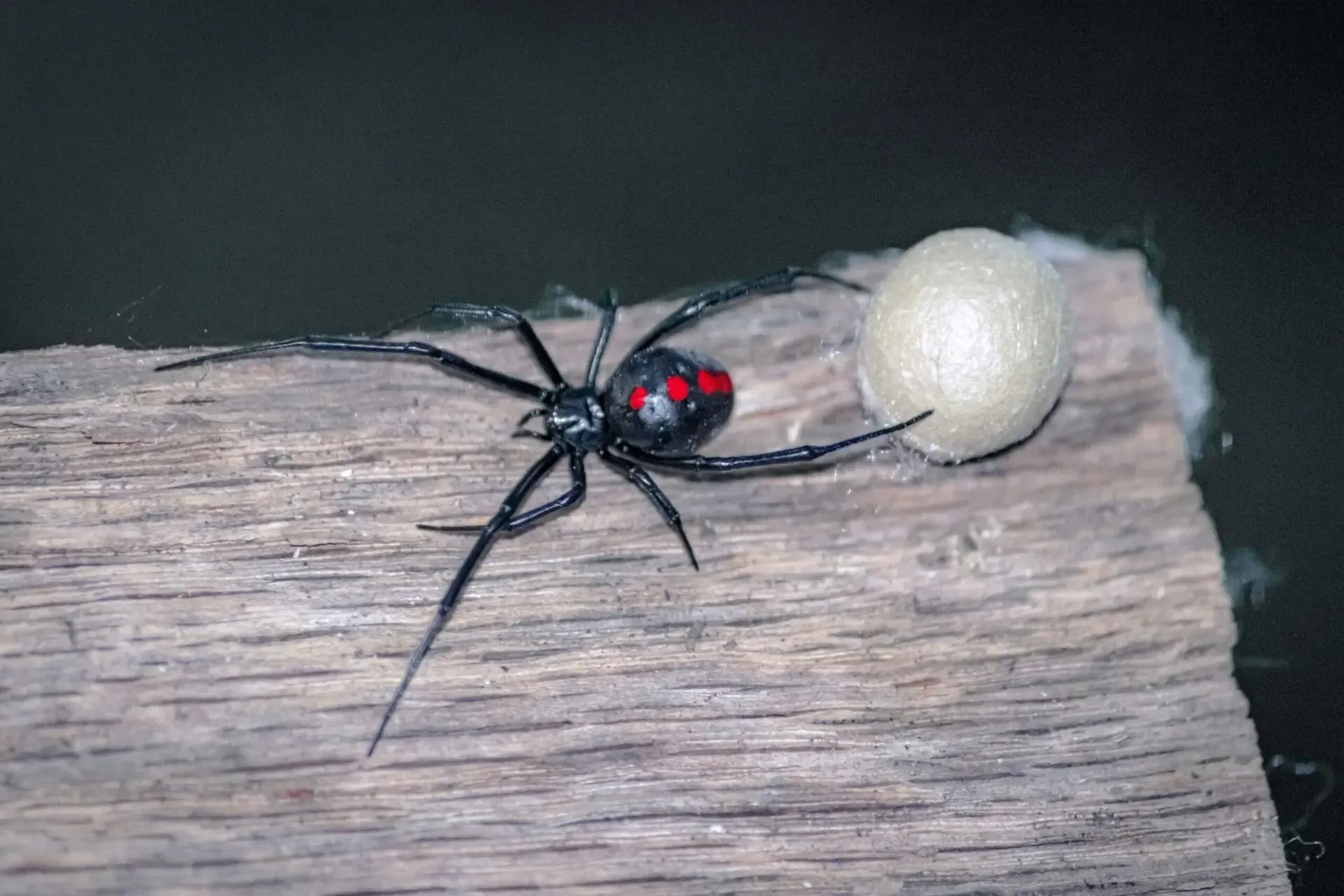
Black widow spiders get their common name from the popular belief that the female eats the male after mating, a phenomenon which rarely happens in nature. These spiders can be found worldwide with five species established in the United States and are most recognized for the red hourglass shape on the underside of their abdomen. Although fatalities are rare, the black widow’s venom is reported to be 15 times stronger than a rattlesnake’s and can cause muscle aches and nausea, as well as make breathing difficult. Read on to learn more about black widow spider control and extermination.
Habitats
- Dark, undisturbed areas such as garages, basements, and sheds
- Woodpiles, under rocks, and in debris
- Outdoor structures like eaves, fences, and crawl spaces
- Occasionally inside homes in corners, closets, or rarely-used storage areas
Behavior & Characteristics
- Nocturnal and secretive, rarely aggressive unless provoked
- Build irregular, sticky webs to catch prey
- Feed primarily on insects and other small arthropods
- Can live for several years, especially females in protected habitats
- Males are smaller, less venomous, and rarely bite

Identification, risks & prevention — including how to find Bark Scorpions with a blacklight.
FAQs
Are black widow spiders dangerous?
Yes, their bites can cause pain, cramps, and systemic symptoms, but fatalities are extremely rare with medical treatment.
How can I prevent black widows in my home?
Keep areas clean and clutter-free, seal entry points, remove debris and woodpiles, and regularly inspect garages, basements, and sheds.
What should I do if I see a black widow?
Do not provoke it. Contact a professional pest control service in Tucson or Phoenix, AZ, to safely remove the spider and prevent future infestations.